
8 Expert Writing Lessons for Memoirists from Nicole Graev Lipson
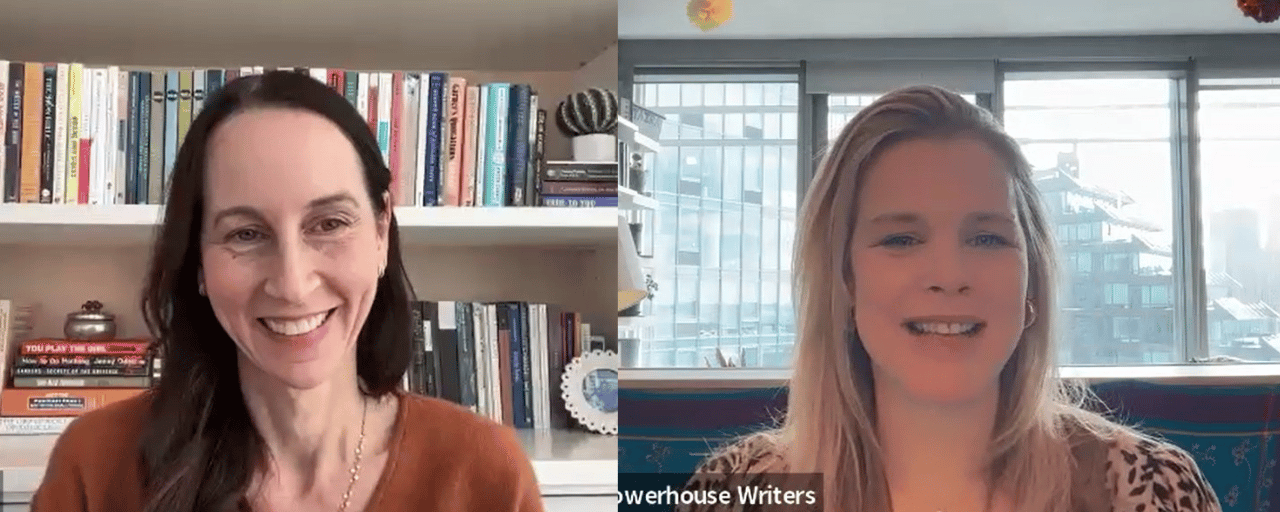
In February of 2026, Nicole Graev Lipson, author of the bestselling memoir in essays, Mothers and Other Fictional Characters, joined The Finishing School for Writers to share what makes her writing feel alive, from structure to memory.
Nicole’s work has been selected for Best American Essays, awarded a Pushcart Prize, and published in some of the most respected literary journals in the country, including The Sun.
Here are the 8 most valuable things she shared:
1. A memoir in essays mirrors how life actually unfolds
“Our lives unfold in episodes, and they circle around the same themes, the same concerns, again and again. It’s not linear. I think of the structure a little bit like a spiral staircase. You live, you have these experiences, you learn, you forget. You come back, and circle back, you learn again.”
Nicole explains that you don’t need to write a memoir in a straight chronological line. Life doesn’t work that way, and neither does a memoir in essays.
2. Let your reading life be porous with your real life
“Whatever I’m reading at the moment colors how I see the world at that moment. And conversely, whatever’s happening to me in my life will color how I read something.”
Each of Nicole’s literary essays is in conversation with a written work. She reads as part of living, and what she’s reading shows up organically in her stories. You don’t have to be the expert, just write about your experience with the book.
3. Write in the gray areas, not the extremes
When thanking Nicole for writing what could be very political issues in the gray areas, she responded:
“Most of us don’t exist on the far, barbelled ends of an issue, but that’s what gets the most traffic. I have a commitment to exploring the gray areas, ambiguity, uncertainty. That’s where the most interesting material lies.”
She writes about the messy middle ground where you hold multiple truths at once, instead of taking hard stances.
Social media wants you to pick a side. Essays let you explore complexity.
4. Your goal isn’t to persuade — it’s to let readers inhabit your experience
“I’m trying to conjure what it is to have this particular experience. Not necessarily to come down on any persuasive side about it, but to just lay it out there and express it.”
Nicole’s essays ask: Am I alone here? Am I the only one feeling this way? That vulnerability is what creates connection. It’s a great reminder that you can start to write while you’re still confused.
5. When it comes to others, write from deep care and love
“I went over things again and again to ensure that every single thing I wrote about another person was written out of deep care and love. That doesn’t mean sugarcoating or putting someone on a pedestal, but making sure that every detail was caring and loving and respectful in its truth.”
People don’t want to be seen as perfect. They want to be seen in all their complexity and love nonetheless.
6. Use the “box” method to collect material
Nicole borrows from choreographer Twyla Tharp: start a document (or physical box) when you have an idea. Then collect everything that connects — quotes, images, scraps of thoughts. “When you’re in the middle of writing something, suddenly everything seems to connect to it. It’s almost like there’s this lens through which I’m seeing the world.”
You end up with an “ungodly mass” of material. Then your job is to figure out how it all connects, like a constellation. She keeps all the notes at the bottom of her doc, writing at the top, and dives down when she wants to pick something up.
7. The difference between a journal entry and an essay is audience
“When I’m writing something I want to put out into the world, I’m constantly thinking about audience. What does the audience need to know to understand what I’m saying here? What do I need to do here to not lose them?”
A journal is for you. An essay is thinking about how to be thoughtful and generous toward a reader.
8. Write from who you are, not who you should be
“We are all original if we tell the truth, but it has to be from the person we are and not the person we think we should be. The should is a pretty dreary place to write from. The only way to distinguish oneself as a writer is to be oneself as a writer as much as possible.”
Trying to sound like someone else won’t help. Your voice is what makes you original.