The Art of the Comeback: Building Your Emotional Recovery Rate
My trainer once measured something about me I hadn’t known was a metric: my recovery rate. Recovery rate is how quickly the heart settles after exertion.
When exercise stops, your heart rate should begin to drop. The faster it falls in the first minute or two, the stronger the system behind it—your cardiovascular fitness and your body’s ability to shift out of stress and into recovery. Regular exercise trains the heart to do this more efficiently.
A quick drop means your system resets well, which is generally linked to better heart health. Slower recovery can signal that your body is still working to catch up.
After a personally challenging AWP conference this year, I thought about my emotional recovery rate.
The photo below was taken 5 minutes after a mini menty b I experience, causing me to ask for a hug from Jerry Portwood, editor of the Queer Love Project, with whom I was boothing.
But let's back up. I was on the train to Baltimore tying up a story that was to run in the Times that Sunday when one of the main sources for my story messaged me: You’re not going to use my last name, right?
Long story short, she pulled out of the story, adding about 10 more hours of work I’d have to re-do to an already packed week, and making me feel like an idiot in front of my editor, who had to pull his plan for Sunday.
After five years of fairly steady meditation, I knew what to do: Accept.
But then I forgot my coat and lost my wallet and the QR code didn’t work and there was a Zoom snafu that kicked all the Finishing School students out of a meeting and…
I went over to Jerry, asked if he was a hugger, and he gave me a hug, then when he asked what was up, I teared up. And then I went to the bathroom, and got it together.
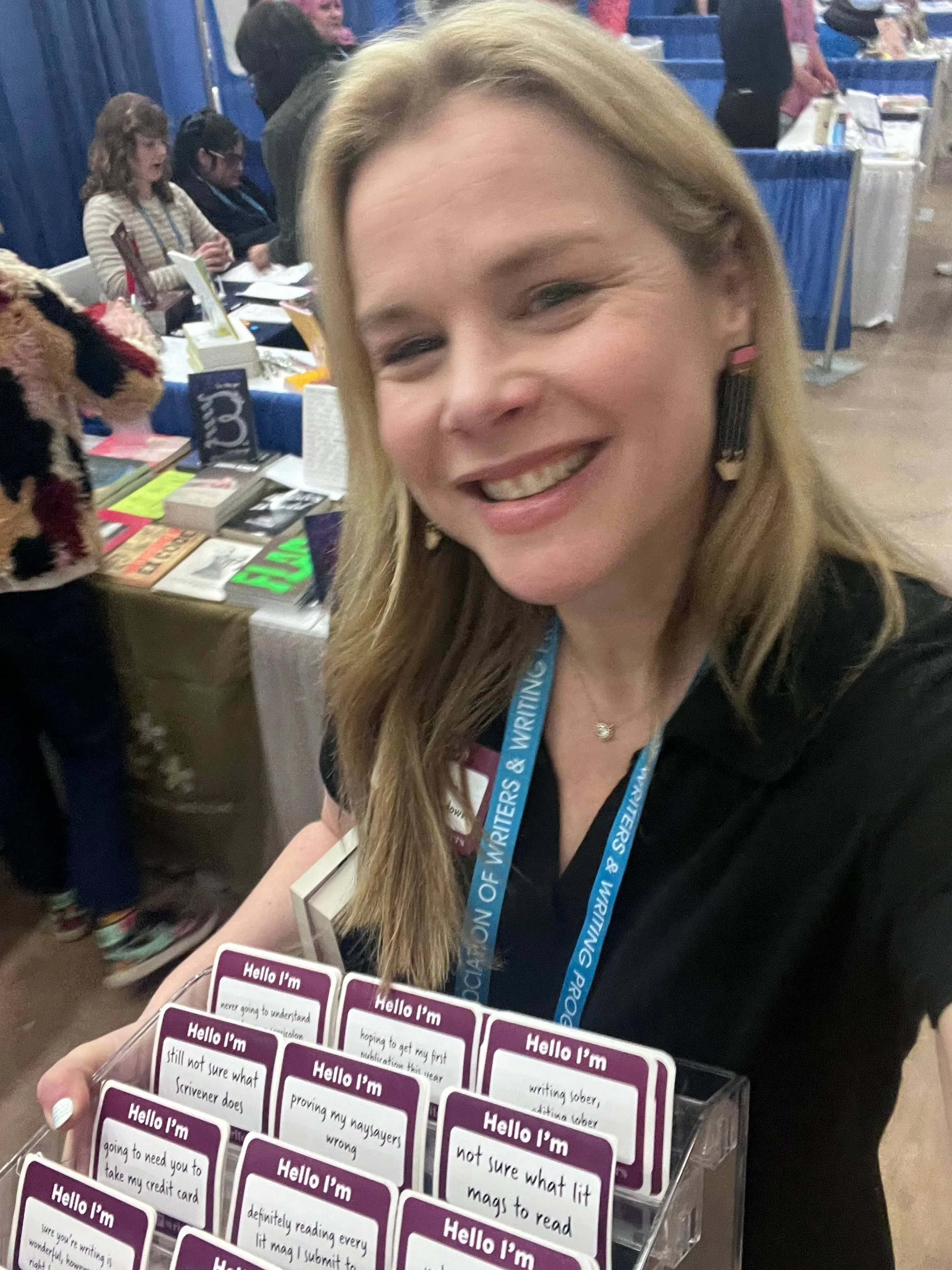
I came out, grabbed my lil funny name tags and went back out there, enjoying how much people laugh at them, and I snapped the photo above. (Sorry it’s a little blurry.)
The writing life involves so many setbacks, so much rejection, so many hits. If there’s one skill that I’ve honed over these years, it’s the ability to keep moving even if I feel down, and to recover after a setback, and even a tantrum, as quickly as I can.
As Rocky said, “It ain’t about how hard you hit. It’s about how hard you can get hit and keep moving forward.”
The main tools for this: meditation, community, exercise. I hope you find some way to fill your life with them, so you can get back up and get out there.